


I consider “Where is my MOAT?“ to be like a mini-MBA 😎
This week, my subscribers receive 5 posts. Here’s the schedule for this week:
25 March - [Essay] on business models: B2B vs. B2C (with a focus on OpenAI)
26 March - [Analysis] Macroeconomics (March 2026)
27 March - [Market updates] NVIDIA
28 March - [Deep dive] Reddit
29 March - [Deep dive] Coinbase
…and here is the schedule for the next week:
2 April: [Essay] AI needs consultants
3 April: [Market updates] ARM
4 April: [How startups work] Waymo —> new category to WIMM
5 April: [Deep dive] on Intel
If you find WIMM useful, please share it with a friend or a colleague. WIMM is free for one month ... plenty of time to decide if it’s worth keeping in your stack.
Dear OnStrategy Reader,
Here is what you will find in this issue:
The opportunity cost of populism (🇪🇸 Spain vs. 🇦🇷 Argentina)
The Cost of Focus in AI
🏎️ Ferrari and the economics of scarcity
The unbundling of Disney
on Macroeconomics (March 2026)
..and more
Onto the update:
The opportunity cost of populism (🇪🇸 Spain vs. 🇦🇷 Argentina)
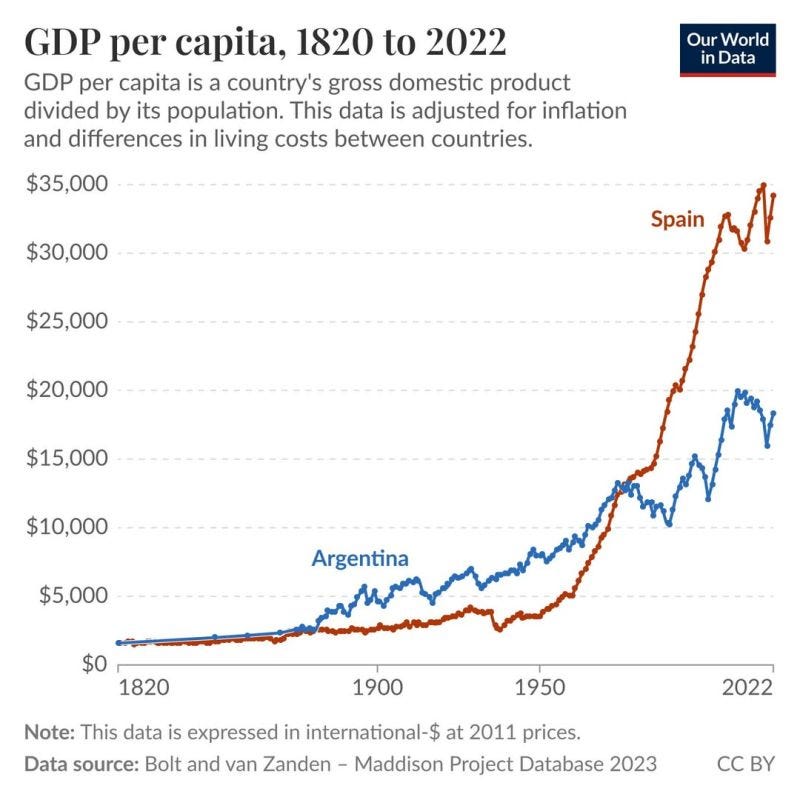
Argentina is what happens when a country confuses redistribution with growth for just long enough that the bill compounds. In 1900, Argentina looked like Spain’s richer cousin, but by 2022, Spain looks like the country Argentina thought it already was. The gap is explained by policy persistence, ie. decades of “free stuff” financed by inflation, debt, and eventually credibility. The market is very forgiving in the short term (ie. you can print, subsidize, protect), but it is extremely unforgiving over a century. Compounding works both ways.
Javier Milei’s diagnosis is directionally right, because incentives matter, prices matter, deficits matter. But the uncomfortable part is that macroeconomic damage is easier to create than to reverse. You can destroy trust in a currency in a few years, while rebuilding it takes a generation. You can distort capital allocation quickly. However, fixing it requires sustained discipline that democracies rarely maintain.
Argentina’s story is not about one bad decision, but about many rational short-term decisions that, over time, made long-term growth almost impossible. That is the real chart here. LINK
The cost of focus in AI
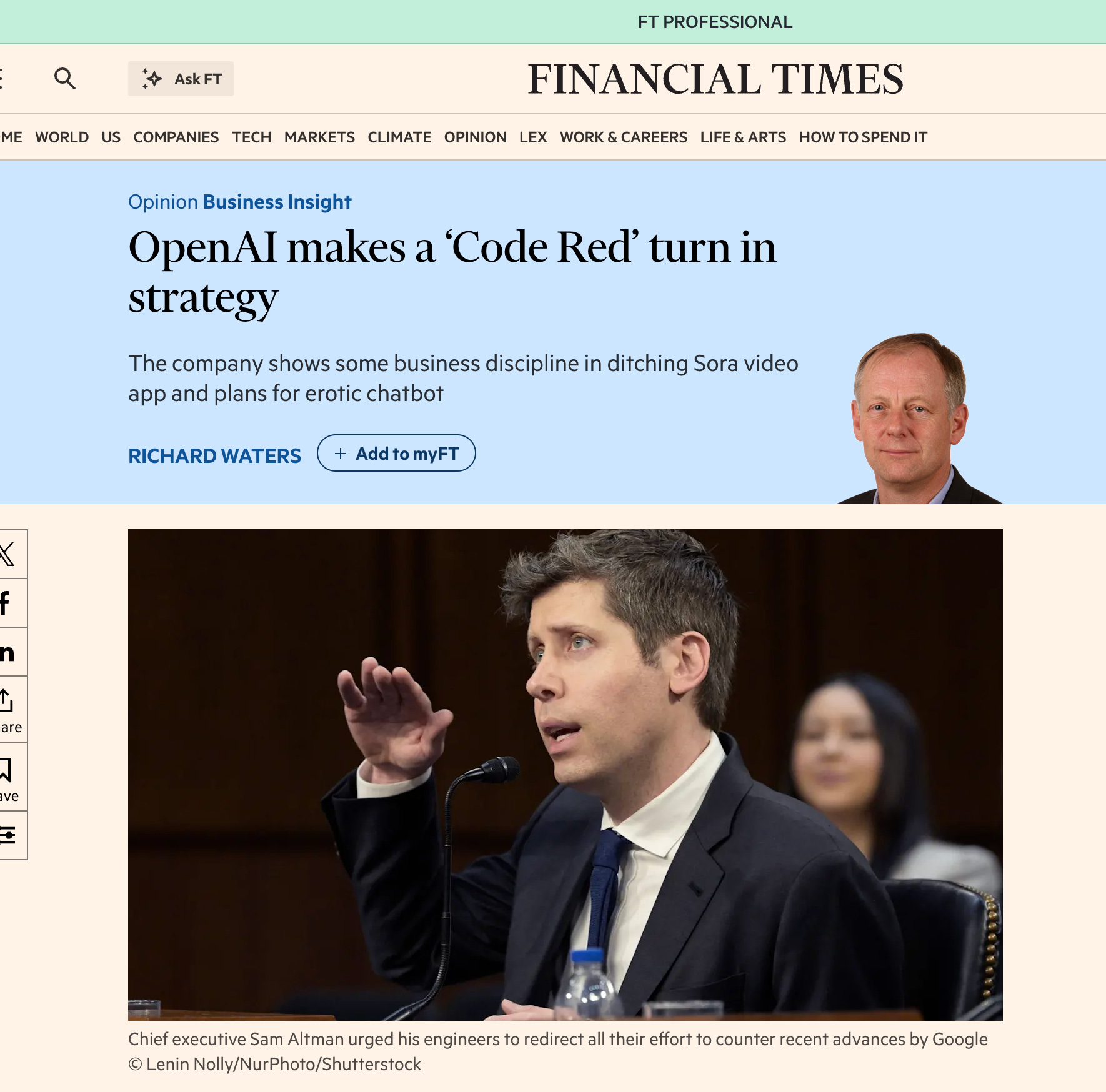
What this “Code Red” moment really reveals is that OpenAI is transitioning from a research-driven organization with optionality to a product-driven company with constraints.
In the pre-AI era, tech companies could explore adjacent opportunities because the marginal cost of experimentation was mostly people. Now, in the AI era, every experiment consumes scarce compute and strategic focus. Scrapping Sora and other side projects is therefore less about failure and more about prioritization. The winning strategy in AI is in the depth around a core use case, which for OpenAI is clearly ChatGPT as an “all-purpose assistant”.
The implication is that AI competition will converge around distribution and integration rather than pure model capability, and here Google is the best positioned to win. OpenAI’s early lead came from being the default entry point for users, but that advantage erodes as incumbents like Google and Meta leverage existing user bases.
As a result, OpenAI’s pivot toward enterprise and deeper product integration mirrors the historical trajectory of platforms like Google: initial breakthrough, followed by a race to embed into workflows and become indispensable. The companies that win will not be those that build the best models in isolation, but those that align their product surface with sustained usage, turning compute into daily utility rather than occasional novelty. FT
🏎️ Ferrari and the economics of scarcity
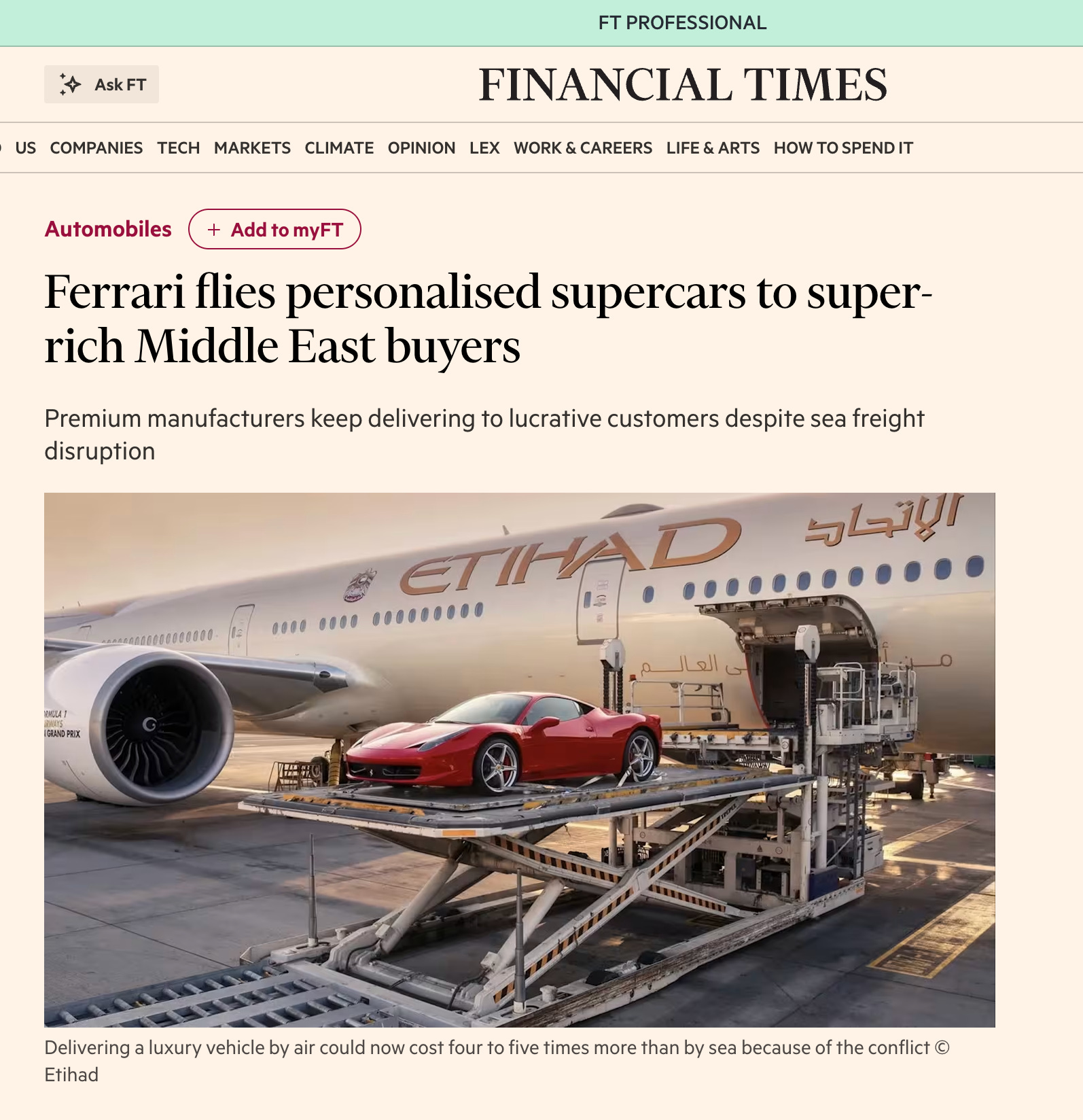
Ferrari flying cars to the Middle East is a useful reminder that luxury businesses operate on a fundamentally different set of constraints than traditional manufacturing. Price elasticity is effectively irrelevant, while delivery and customization are core to the value proposition. When customers are willing to pay 4-5x more for air freight, the constraint shifts from cost efficiency to relationship management and brand consistency. In that sense, Ferrari is selling scarcity, personalized experiences, where logistics becomes part of the product itself rather than a backend function.
The broader implication is that in periods of geopolitical disruption, luxury companies are less exposed to demand destruction and more exposed to allocation decisions. The Middle East remains a disproportionately profitable market due to high-margin personalization, meaning that reallocating supply elsewhere is not a neutral decision but a margin trade-off. This highlights Ferrari’s structural advantage: limited supply and high customization create pricing power and flexibility that traditional automakers lack. In a world of constrained logistics and uncertain demand, the ability to choose where and how to deliver, and to whom, becomes a strategic lever, reinforcing luxury as a business model defined by control rather than scale. FT
The unbundling of Disney
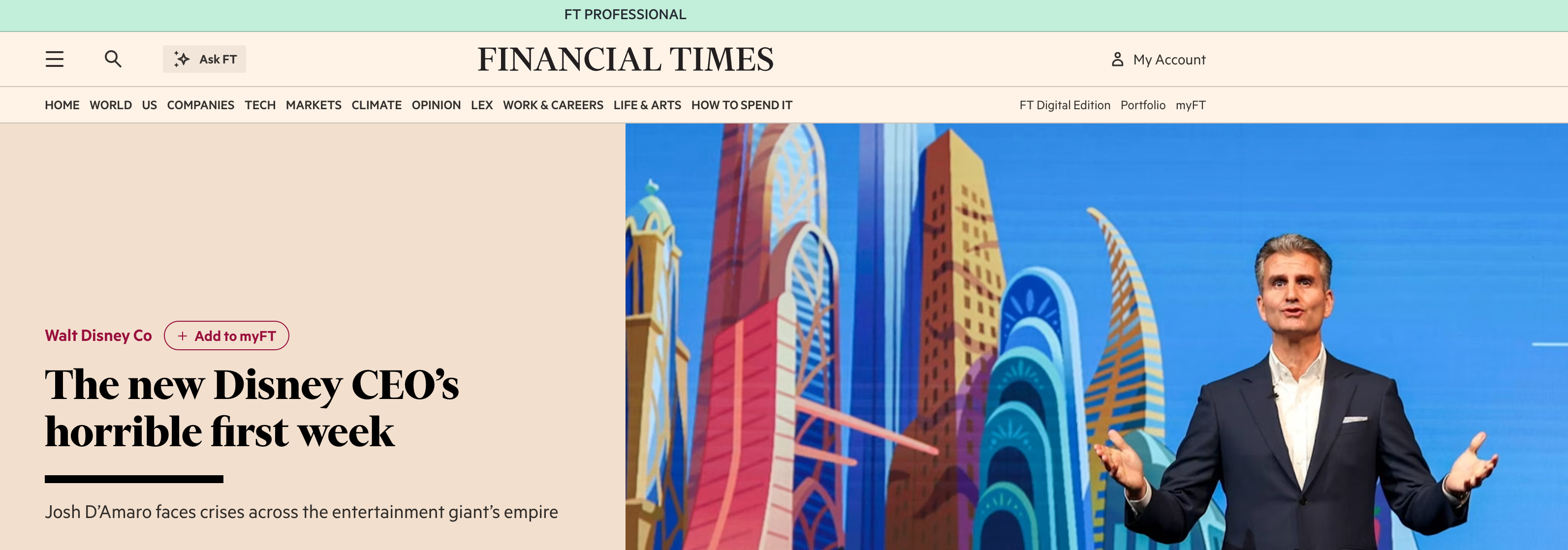
Disney’s first week under new leadership is less about bad luck and more about structural exposure. The company is discovering that in a world defined by platforms and AI, owning intellectual property is no longer sufficient to control distribution or monetization. Disney is increasingly dependent on external platforms to extend its reach, yet those platforms operate on very different incentives and timelines. In the past, Disney’s advantage came from scarcity (=owning characters and franchises that others needed). In an AI-driven world, where content creation becomes abundant and cheap, that scarcity erodes, and with it, the leverage Disney once had.
At the same time, the issues around linear TV and declining engagement point to a company caught between two models. This means a legacy distribution system that is structurally declining and a future platform strategy that it does not fully control. The key strategic question is not whether Disney can produce great content (it clearly can), but whether it can build or own the distribution layer where that content is consumed and monetized. Without that control, Disney risks becoming a supplier in someone else’s ecosystem, where value accrues to the platform rather than the creator.
The events of this “horrible first week” are therefore not isolated incidents, but signals of a broader transition, from a vertically integrated media empire to a participant in a platform-dominated economy. FT
on Macroeconomics (March 2026)
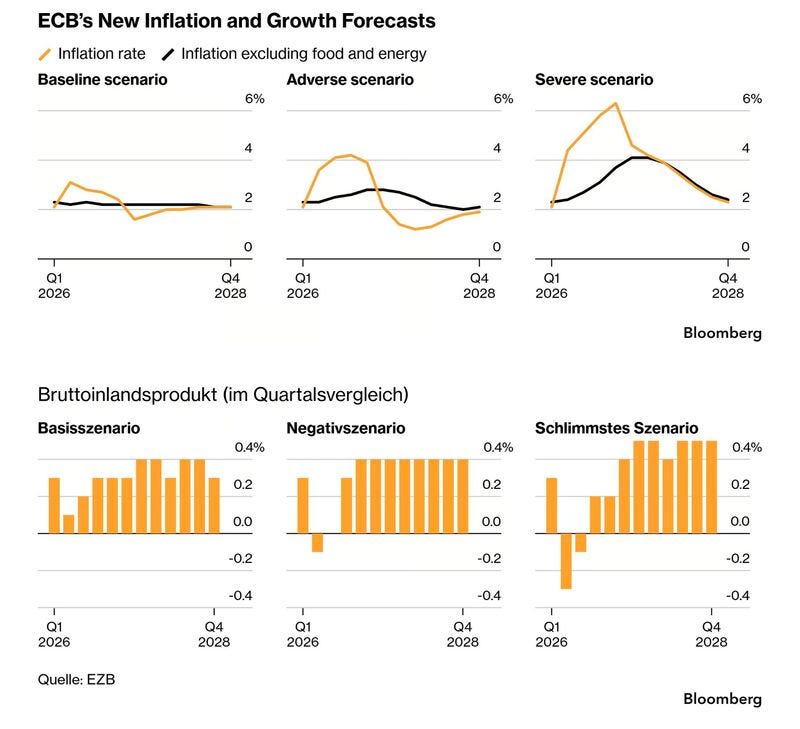
In my latest Where is my MOAT? note I argue that the real macro story right now is not any single headline, but the collision of war, energy, inflation, and politics into one ugly feedback loop:
> Iran pushes oil and fertilizer risk back into markets,
> Europe looks increasingly exposed to stagflation,
> US deficits keep pressuring the dollar, and
> even the AI boom starts to look more physical than digital when semiconductors, LNG,
> and supply chains all run through the same geopolitical choke points.
The market feels like a bloodbath today, but the more interesting question is whether this is a permanent breakdown or just a violent reset before investors start pricing the next phase. WIMM
[Essay] NVIDIA GTC 2026: The architecture of dominance
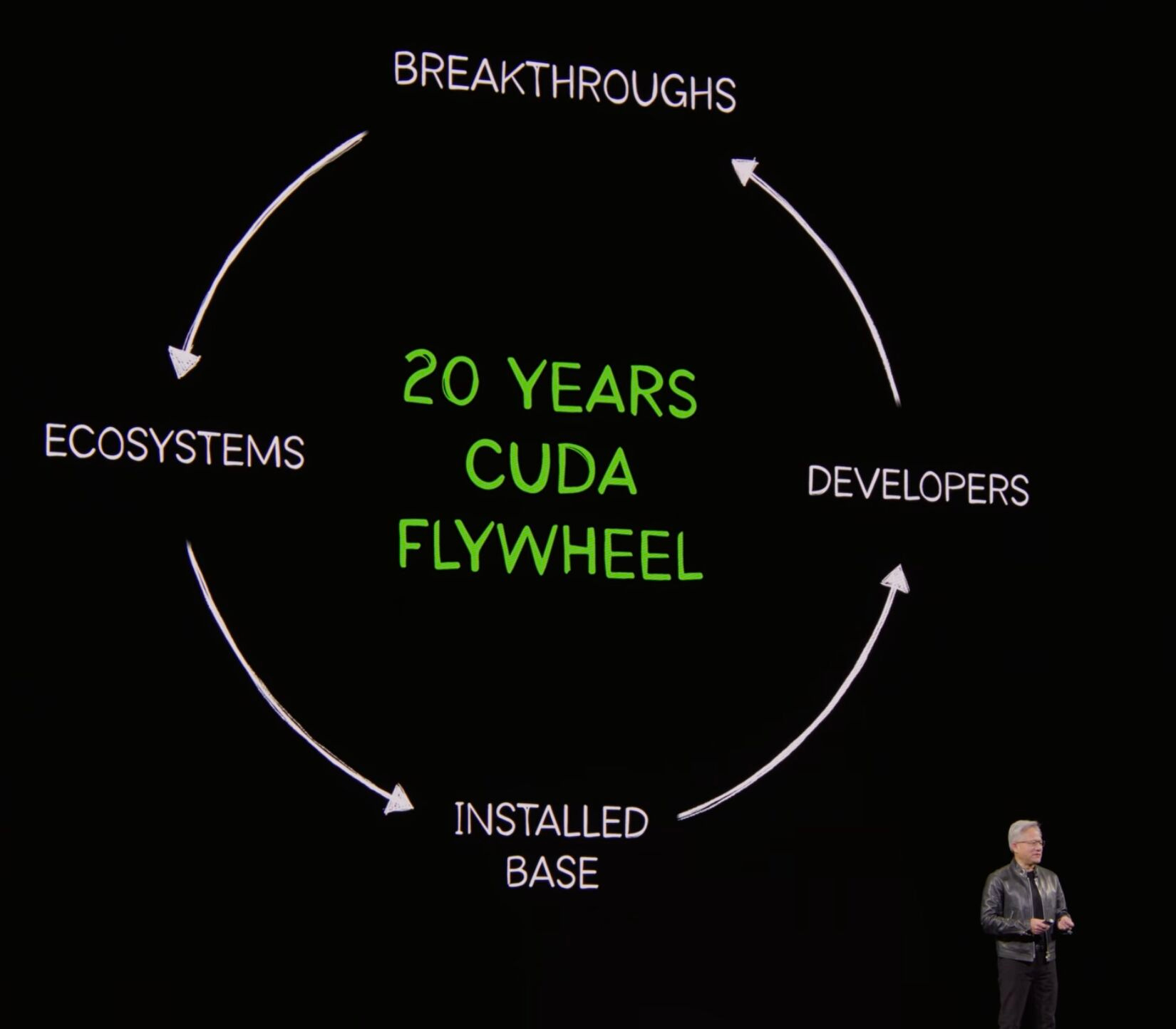
In my latest Where is my MOAT? essay, I argue that Nvidia’s real genius at GTC 2026 was not launching new chips, but disrupting itself before anyone else could.
The company is turning AI infrastructure into a full-stack architecture game where the moat is no longer just the GPU, but the cadence of the entire system with silicon, interconnect, memory, networking, software, and developer lock-in all moving together. WIMM
[PRINCIPLE] You have to write the Playbook
Each path appears unclear at the beginning and no guide contains the full course. A playbook emerges through attention, effort, and reflection. The mind that waits for instruction remains dependent, while the mind that observes and records begins to shape its own method. Order arises from practice, and wisdom forms through repeated action guided by thought.
Take responsibility for your approach and refine it with each attempt. Write what you learn and return to it with discipline. Patterns reveal themselves to those who pay attention and preserve their insights. In this way, your actions gain coherence and your work becomes guided by principles that you have earned. onStrategy