



Dear OnStrategy Reader,
Greetings from Boston, 🇺🇸!
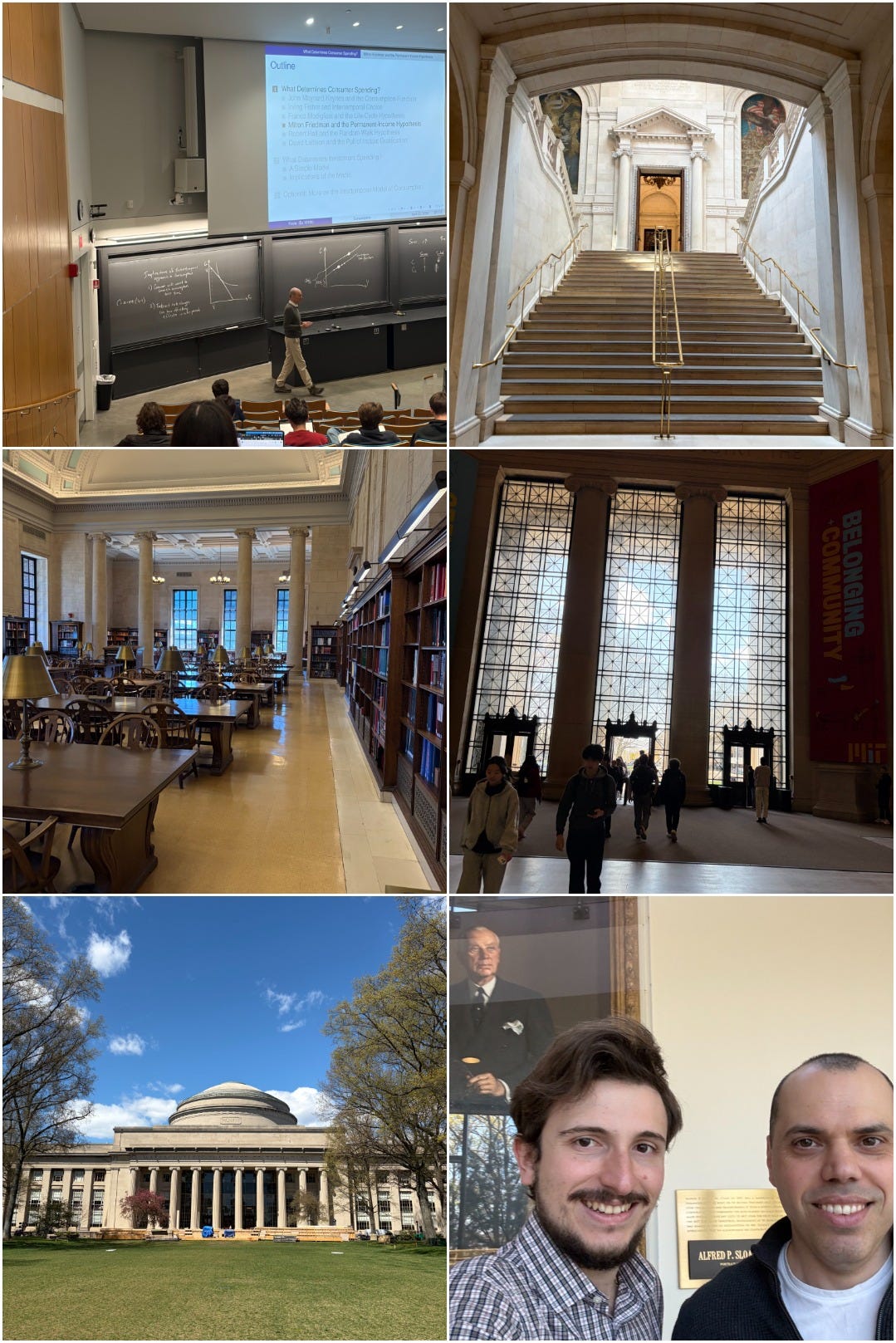
Onto the (short) update:
End of an era: on Apple's old and new leadership
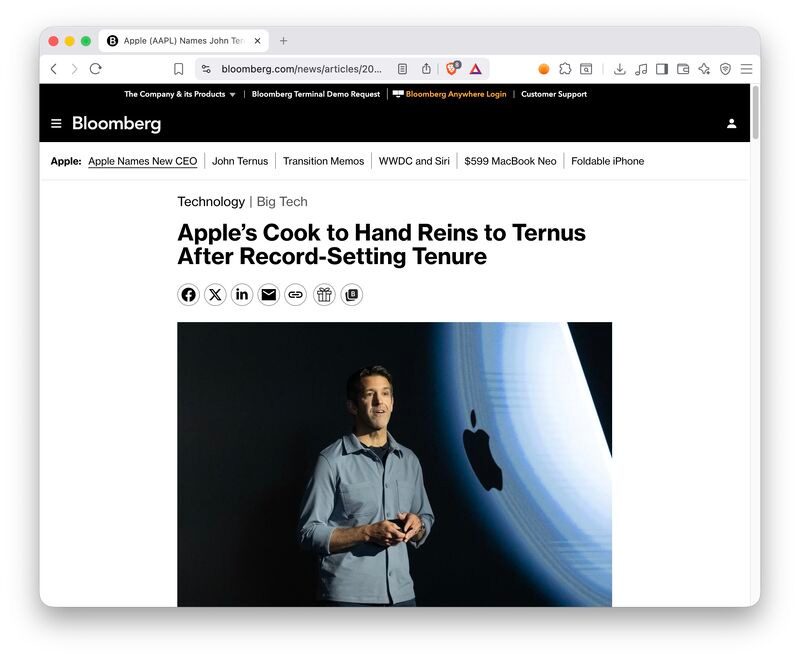
For 15 years, closes one of the most successful "operator eras" in business history. As per "Apple in China" book (by Patrick McGee), we understand clearly that Tim Cook industrialized the iPhone.
He turned Apple into a $4 trillion machine, scaled supply chains globally, built Services into a Fortune 50 business, expanded the ecosystem to 2.5 billion devices, created the Apple silicon that makes all the differences in the world, and, in general, executed with a level of discipline that most CEOs never reach.
This is what great operators do. They change the outcome, not the product. And yet, there was one structural miss. Apple became the best company in a deterministic world… just as the world shifted to a probabilistic one. Because Apple disregarded this world by 'giving' its search engine to Google for a fee, it meant that when AI arrived, the company was not there.
Which is why the timing is right. Leadership transitions matter most when the environment changes, not when performance declines. John Ternus is a product-first leader, stepping into a company that now needs exactly that (= a new interface for computing, built around AI-native devices and experiences)
I’ve been critical of Apple in the last two years, but that criticism exists precisely because the bar is so high. And now, I’m bullish again.
The operator built the empire. The product leader now has to redefine it.
on OpenAI vs Anthropic 🤖
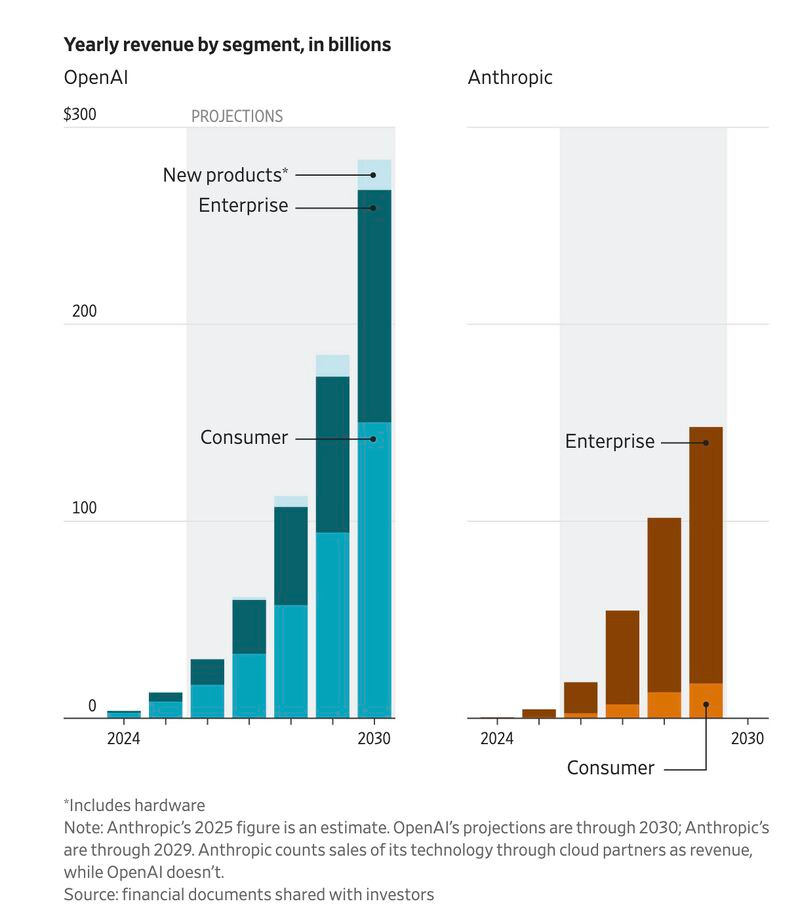
In my latest Where is my MOAT? deep dive, I argue that the real divide between the two is not “which model is smarter”, but how each company is underwriting demand in a world where compute is both moat and liability.
Anthropic looks more disciplined, more enterprise-native, and probably more right about the danger of overbuying infrastructure, while OpenAI still feels more willing to YOLO its way into scale and trust that distribution, workflows, and enterprise integration will eventually justify the spend.
That is why this is no longer a pure model race but a capital-allocation race. One company may be underestimating demand, the other may be underestimating the cost of serving it, and the real answer probably sits in the S-1s.
Subscribe to read (one month free) - click HERE
The Frontier and the Followers
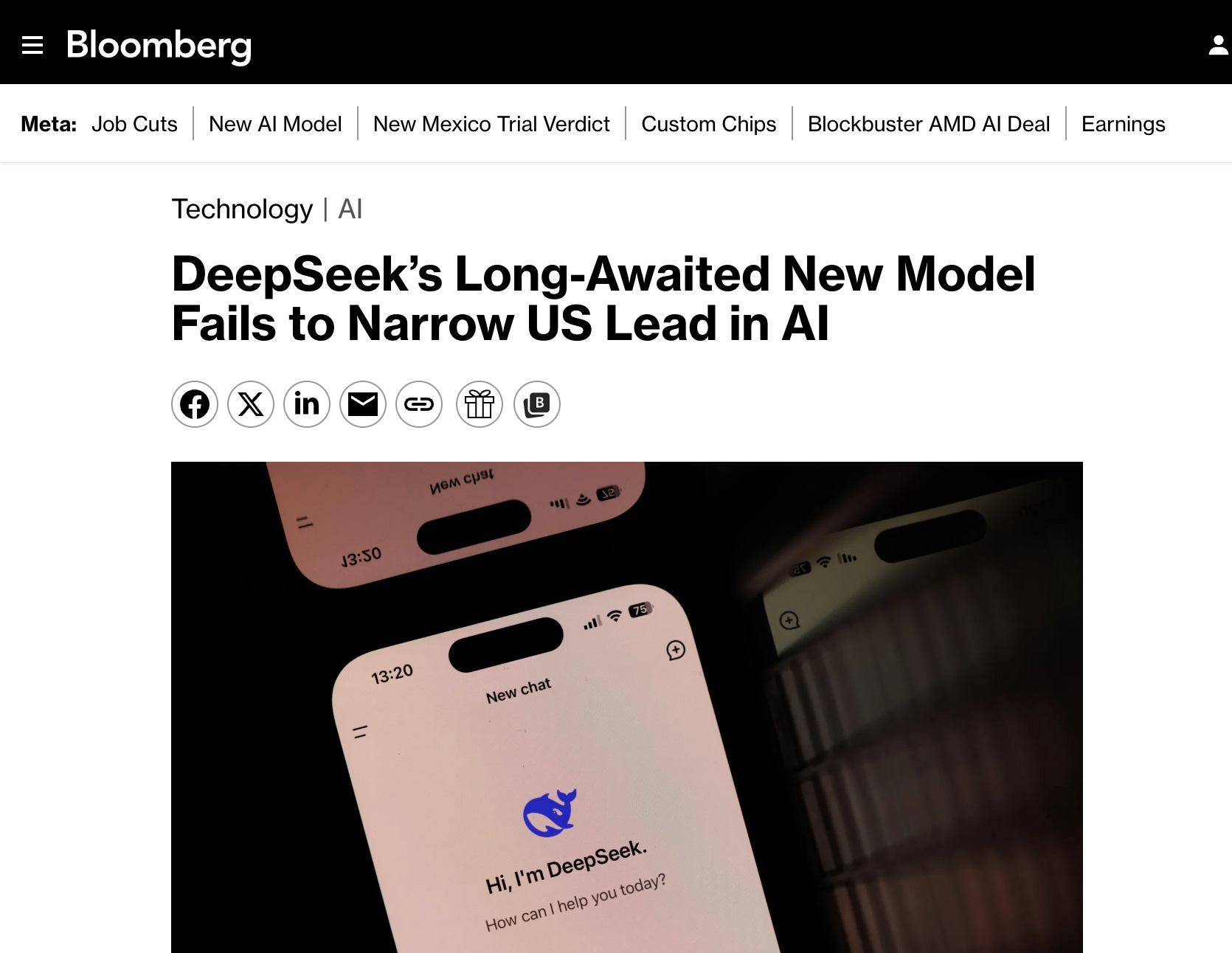
What the DeepSeek result makes clear is that AI leadership is about sustaining the frontier, and that depends on a full stack of advantages: compute, capital, talent, and distribution. Chinese labs have been highly effective at distillation, ie. taking frontier models, optimizing them, and deploying them efficiently… but distillation is downstream of innovation. If access to the frontier is constrained, either by geopolitics, capital restrictions, or closed ecosystems, then the strategy becomes inherently lagging. The recent moves to limit US capital and tighten control over cross-border flows may be rational politically, but economically, they reduce iteration speed and integration into the global AI ecosystem, which is exactly where advantage compounds fastest.
The implication is that AI is becoming an aggregation market, and the US currently owns the key layers: frontier models, hyperscale compute, and global distribution. This is about setting the pace of innovation that others must react to. Without continuous access to that frontier, distillation alone is insufficient to keep up, because the gap is not static, but it compounds. That is why the debate is less about whether China can compete in AI and more about whether its system allows the same level of open-ended experimentation and capital formation required to lead. In that sense, if AI defines the next economic era, the structural advantages suggest that the 21st century will be shaped more by the American system than the Chinese one.
[Essay] The evolution of the CFO function
Finance is personal to me because I’m a finance guy at heart. I started my career in finance and I still think that you can’t be serious about strategy if you don’t understand finance.
For decades, the chief financial officer (CFO) occupied a well-defined position in the corporate hierarchy. The CFO was the guardian of the ledger, responsible for financial reporting, regulatory compliance, capital allocation, cash management, and the integrity of the numbers that flowed to boards, investors, and regulators. It was a role built on 3 things: (1) precision, (2) discipline, and (3) control. The best CFOs were trusted because they could close the books cleanly, defend the audit, and ensure that the organization never spent more than it could afford.
That mandate has not disappeared, but it is no longer sufficient. A convergence of forces (to name a few: artificial intelligence, real-time data infrastructure, macroeconomic volatility, shifting investor expectations, and the rising complexity of global enterprises) is redefining what organizations need from their finance leaders. The CFO function is evolving from a backward-looking control tower into a forward-looking intelligence hub, where value comes mostly from interpreting uncertainty, shaping decisions, and allocating capital with the help of AI.
Understanding this shift is essential for every finance professional and business leader whose work depends on the quality of financial judgment. (Continue reading it here)
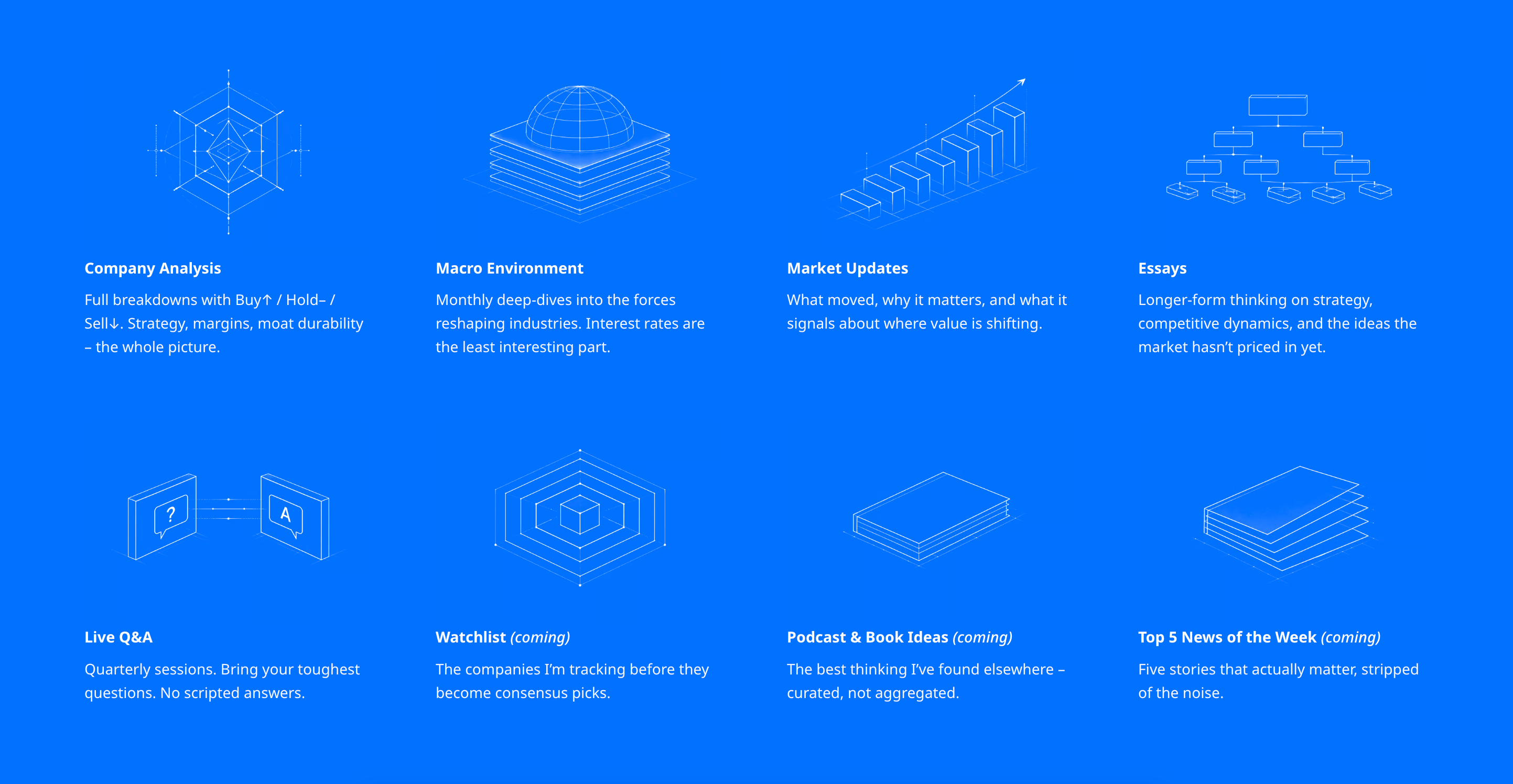
This week in "Where is my MOAT?":
23 April - The evolution of the CFO function
24 April - Portfolio update (only to Premium subscribers)
25 April - Macroeconomics (April 2026)
26 April - [Market updates] on ASML, TSMC and Intel
Consider subscribing to get that👇🏻 (one month free) —>
Thank you for being an onStrategy reader!
Interesting newsletters 💡
Endi Ungureanu - Tura de duminica