


Dear OnStrategy Reader,
Here is what you will find in this issue:
Vinted or why people buy second-hand
NVIDIA’s push into Physical AI brings new winners
Germany’s growth is around…zero
What Tim Cook meant for Apple
on AI Automation & costs
on EV adoption
on universities
Onto the update:
Vinted or why people buy second-hand
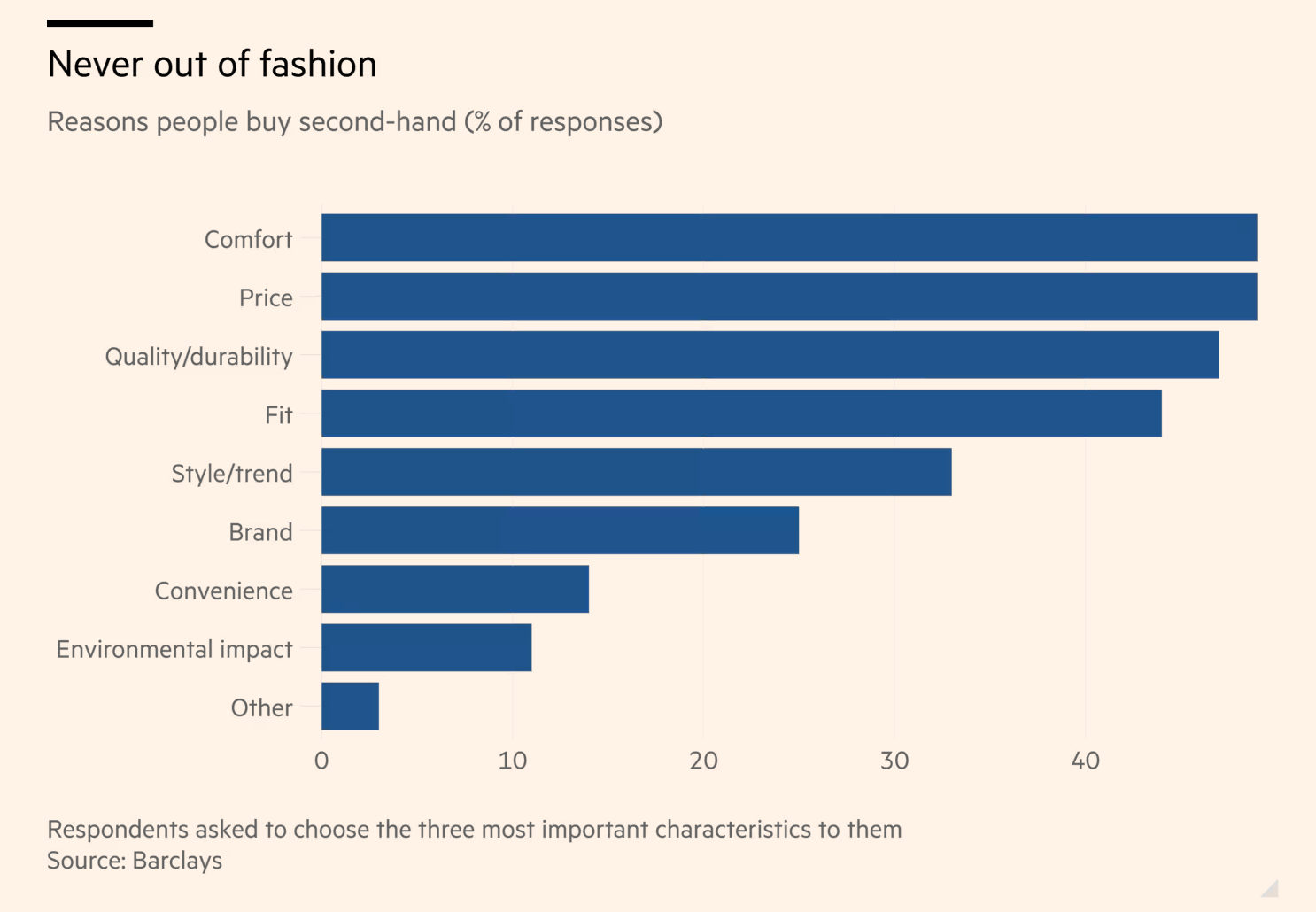
Vinted is what happens when a good user story meets a difficult business model. Yes, it’s worth EUR 8bn and growing fast, but the financials tell a more complicated story. Revenue up 38%, profit down 20%, and still trading at something like 100x forward earnings if you extrapolate current growth. The reason is simple. Peer-to-peer marketplaces scale cheaply on supply, but expensively on demand. You don’t warehouse inventory, but you do spend heavily to acquire both buyers and sellers and, more importantly, to build trust in a market where quality is uncertain by default.
The deeper point is that second-hand fashion works brilliantly for consumers and awkwardly for investors. The demand side is real, driven by price sensitivity and macro pressure, not just sustainability, but the supply side is fragmented and the take rate is structurally limited. Platforms like Vinted are caught in a classic marketplace trap: lots of activity, thin margins, and constant competition from both incumbents (eBay, retailers) and new entrants.
In other words, turning “preloved” into a scalable, high-margin business is much harder than turning it into a popular one. FT
NVIDIA’s push into Physical AI brings new winners
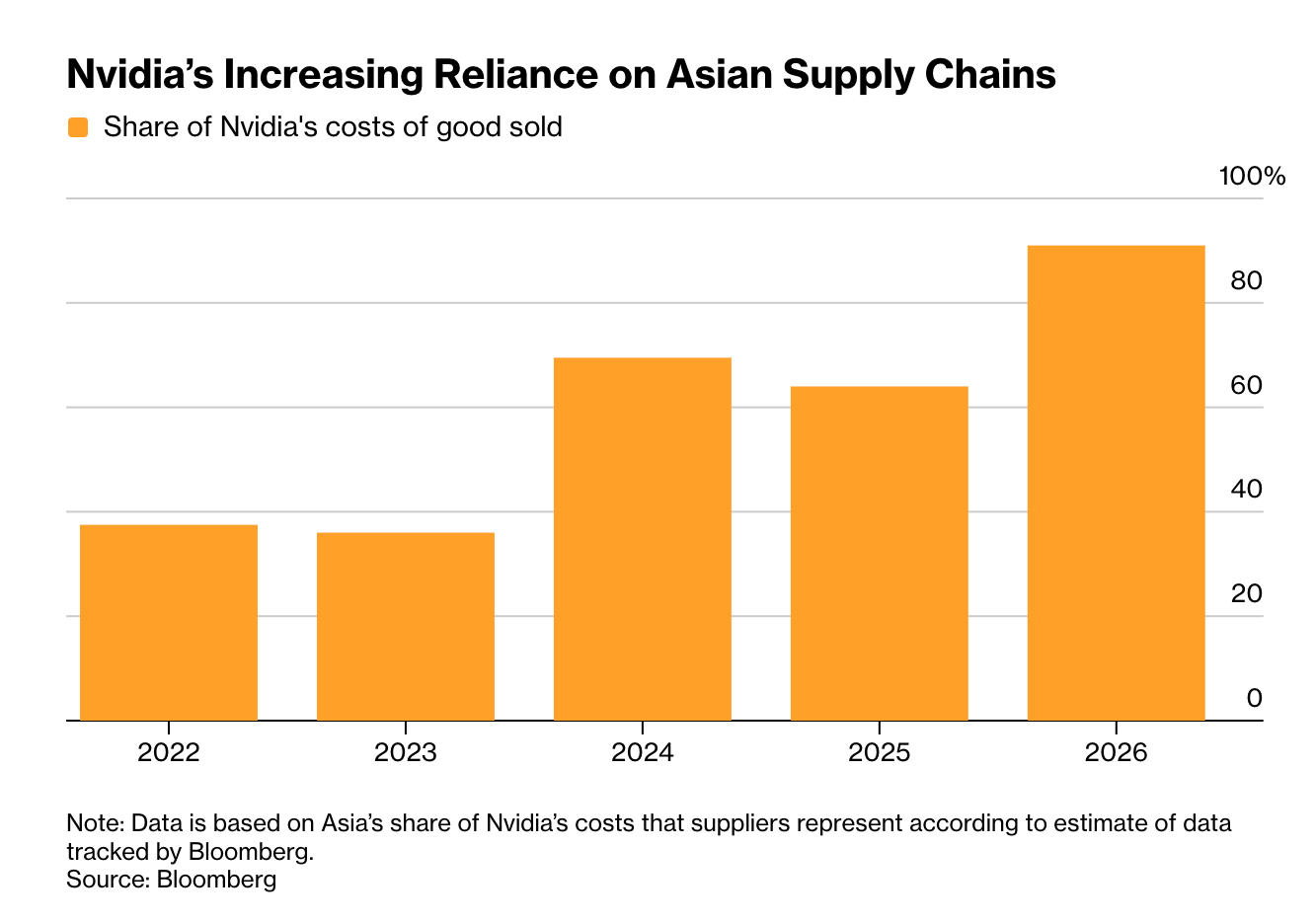
NVIDIA is becoming Asia’s demand-generation engine. The striking number is that Asian suppliers now represent roughly 90% of Nvidia’s production costs, up from about 65% last year, which means every incremental dollar of AI capex is being transmitted directly into Taiwan, Korea, Japan and parts of China. This is why obscure suppliers suddenly trade like strategic assets. The market is buying their place inside Jensen Huang’s machine.
Generative AI made Nvidia the operating system of the data center. Robotics, autonomous systems and AI-enabled manufacturing could make it the operating system of the real economy. That pushes value beyond GPUs into memory, servers, components, sensors, automotive systems and factory automation.
In other words, the AI trade is broadening from “buy Nvidia” to “buy the industrial stack Nvidia needs”. Asia built the hardware base for globalization and now it may become the factory floor for AI. Bloomberg
Germany’s growth is around…zero
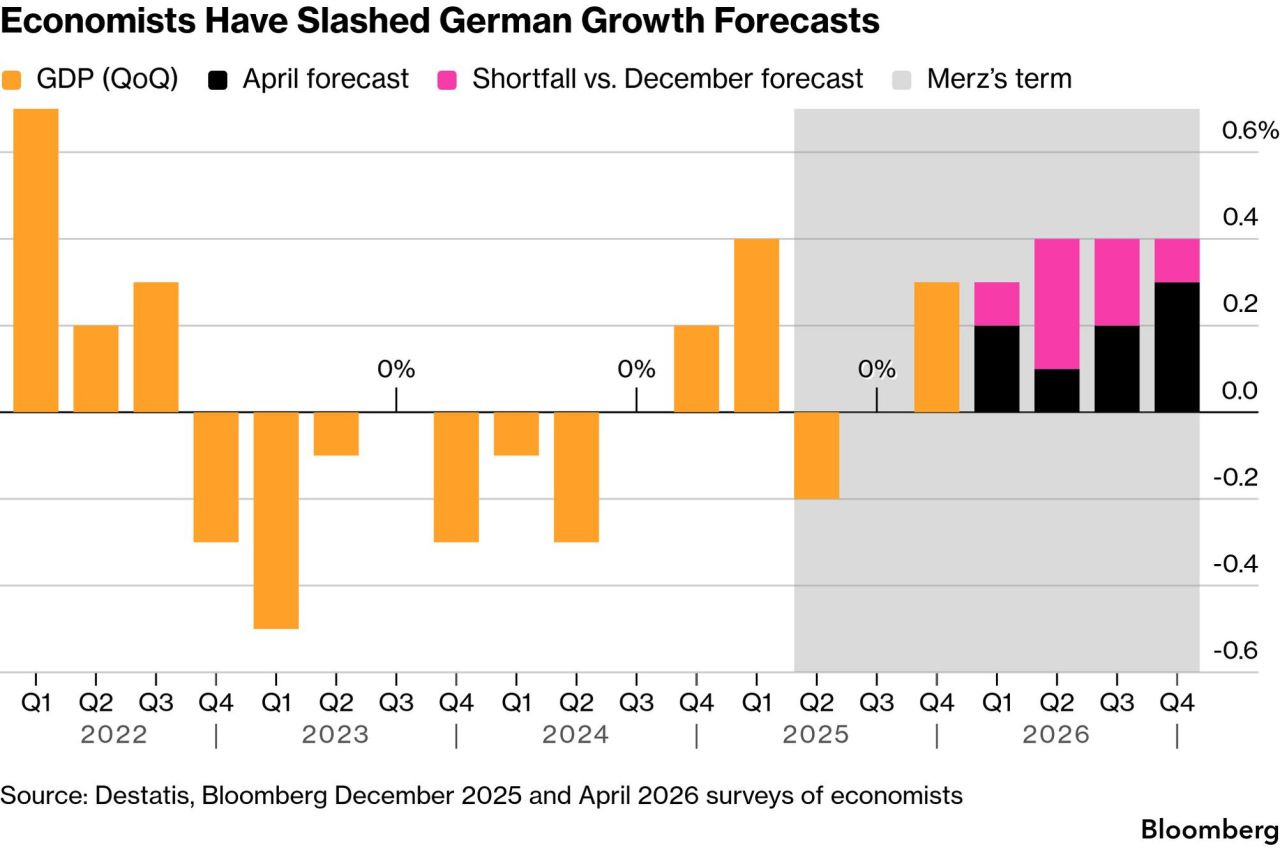
🇩🇪 Germany’s problem is the lack of transmission. The chart from Bloomberg shows a steady downward revision cycle, which is what happens when fiscal impulse meets structural friction (= €500bn of spending, and yet growth keeps getting marked down because energy shocks, weak confidence, and an export model under pressure are canceling out the multiplier).
In other words, Berlin is pushing demand into an economy that can’t respond fast enough on the supply side (e.g., bureaucracy, energy costs, and industrial repositioning are acting like a tax on growth). The result is the worst macro mix with fiscal expansion without acceleration.
What makes this more fragile is timing. The Merz plan was supposed to reignite momentum after near-zero growth (~0.2% 🫠), but instead it is colliding with a geopolitical shock that hits Germany exactly where it hurts most (energy and industry). The risk is not recession per se, but stagnation with inflation pressure creeping back, a quasi-stagflationary setup where policy space narrows (ECB tightening risk) just as growth disappoints.
If the stimulus doesn’t translate into visible productivity gains quickly, confidence becomes the binding constraint and once that breaks, no amount of fiscal spending can fully offset it.
P.S. 0.2% growth? US growth is between 2-4% per quarter
What Tim Cook meant for Apple

In my latest Where is my MOAT? analysis, I argue that Tim Cook’s achievement was not to replace Steve Jobs, but to institutionalize him, which is, to turn taste into process, product vision into global operations, and Apple into the most efficient premium hardware machine ever built.
The Cook doctrine (ie. focus, simplicity, control of core technologies, deep collaboration, and saying no to almost everything) was the operating system for that transformation, and it worked brilliantly in a deterministic era where the goal was to make hundreds of millions of perfect objects, on time, every time.
However, that success also leaves 3 very un-Cook-like open questions for the next CEO. WIMM
on AI Automation & costs
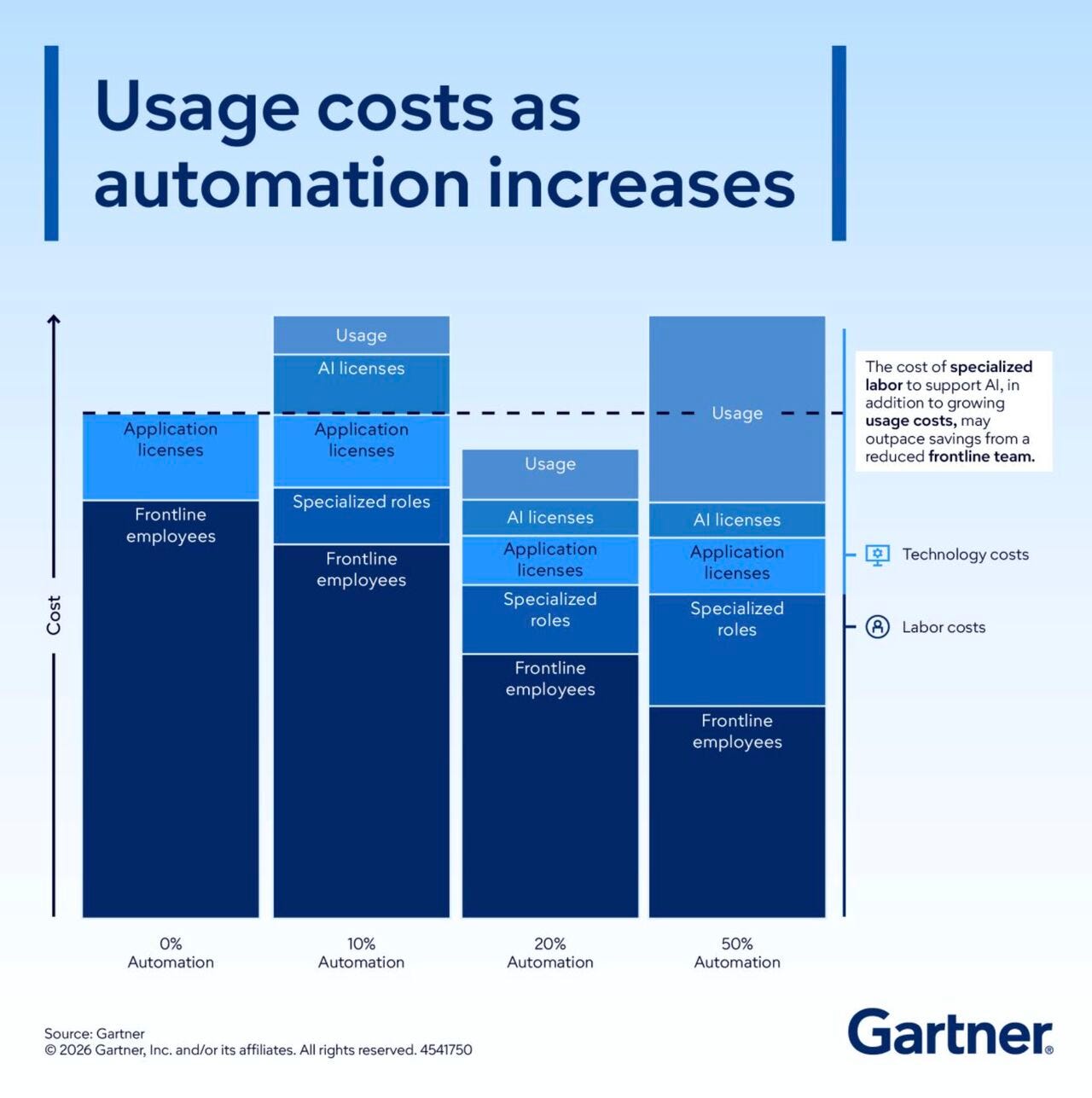
After a point, AI is a cost reallocation tool.
Companies think they are buying efficiency, but what they are really buying is capacity.
Same headcount (or slightly less), more output, and a much more complicated cost structure that includes vendors, infrastructure, and ongoing model usage... and that’s before you realize that only ~20% of firms have actually reduced headcount in practice, which suggests the savings story is mostly aspirational. Gartner
on EV adoption
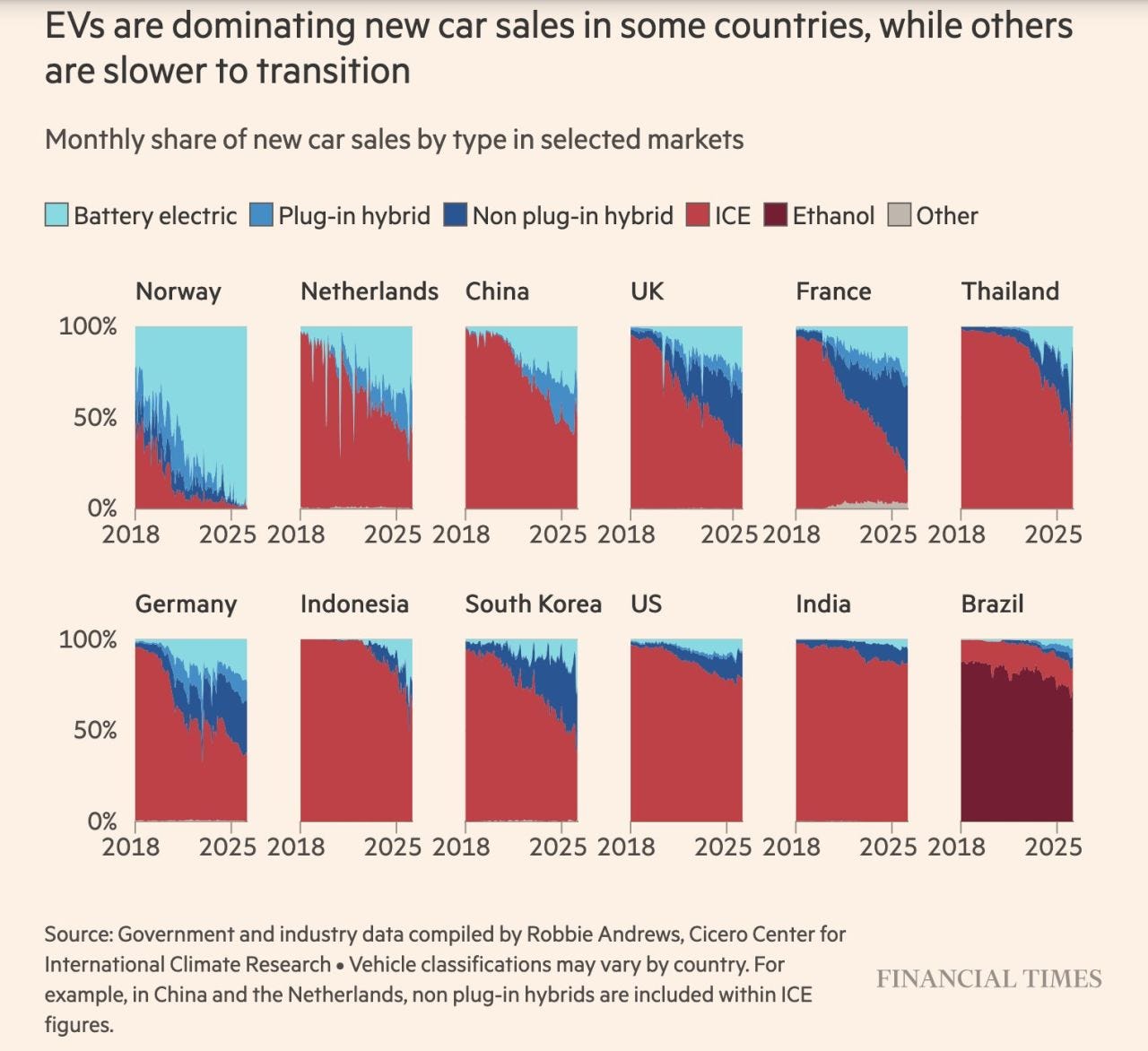
This chart is a nice reminder that the future of cars is both obvious and extremely uneven, which is how most inevitabilities look in real time. Norway is basically done with internal combustion, the Netherlands is well on its way, China is moving fast (and has a huge interest in doing this), and then you have the US, India, Brazil doing a sort of "we’ll get there eventually, maybe" shuffle.
The direction is not really in doubt, because EVs win on the things that compound, like fewer moving parts (so less maintenance!), improving battery economics (so better cost curves), software integration (so better user experience), and, crucially, policy alignment (subsidies, regulation, infrastructure).
ICE cars, by contrast, are a mature technology with limited room for improvement and increasing regulatory pressure. The interesting question is not if EVs win, but how fast each market is forced into that equilibrium, which depends less on consumer preference and more on infrastructure buildout, government incentives, and whether local incumbents can survive the transition long enough to slow it down.
In other words, EV adoption looks like a market choice, but it behaves like a policy-driven inevitability.
on universities 🎓
Universities are one of history’s great regulatory arbitrages. They began as guilds for teachers, somehow acquired monasteries, dorms, stadiums, hospitals, laboratories, enormous real estate portfolios, and the moral right to fight with absolutely everyone, and then called that "shared governance".
The paper’s core insight is that this bizarre structure is not a bug but the feature. Universities survive because they are half medieval cooperative, half asset-holding corporation, which means the faculty get enough autonomy to pursue weird ideas and the institution gets enough control to keep the buildings from being sold to fund someone’s obscure seminar on 14th-century punctuation. The amazing part is that this arrangement is wildly inefficient in the normal corporate sense and yet extremely robust in the civilizational sense.
Companies optimize for quarterly margins, but universities optimize for being impossible to kill. The chart on page 2 makes the joke nicely. Almost all of the top endowed universities are older than 50 years, while a much smaller share of Fortune 500 firms make it that long. That is not because universities are better run, but because they are harder to liquidate, harder to discipline, and weirdly good at converting donor money and government money into permanence.
And then there is the really fun part, which is that the same faculty autonomy that produces Nobel prizes also produces endless trench warfare with presidents, trustees, popes, politicians, and each other. That is not accidental either. If you want curious, status-obsessed intellectual entrepreneurs, you are not hiring agreeable middle managers, but you are hiring people who will absolutely write a 484-page book about how their boss is ruining the university, and then demand tenure so they can do it again next year.
The broader implication is pretty brutal for anyone who wants universities to behave like efficient firms or neat bureaucracies They can’t, because their productive asset is misaligned human capital. The same disorder that makes universities embarrassing also makes them generative. You can centralize them more and maybe get cleaner budgets, but you probably get fewer discoveries. You can free them completely and you get more genius plus more chaos.
Concluding, the real lesson is that universities endure because they found a stable way to remain permanently unresolved. NBER
[Essay] Function or Business Unit? Designing the firm for the AI age
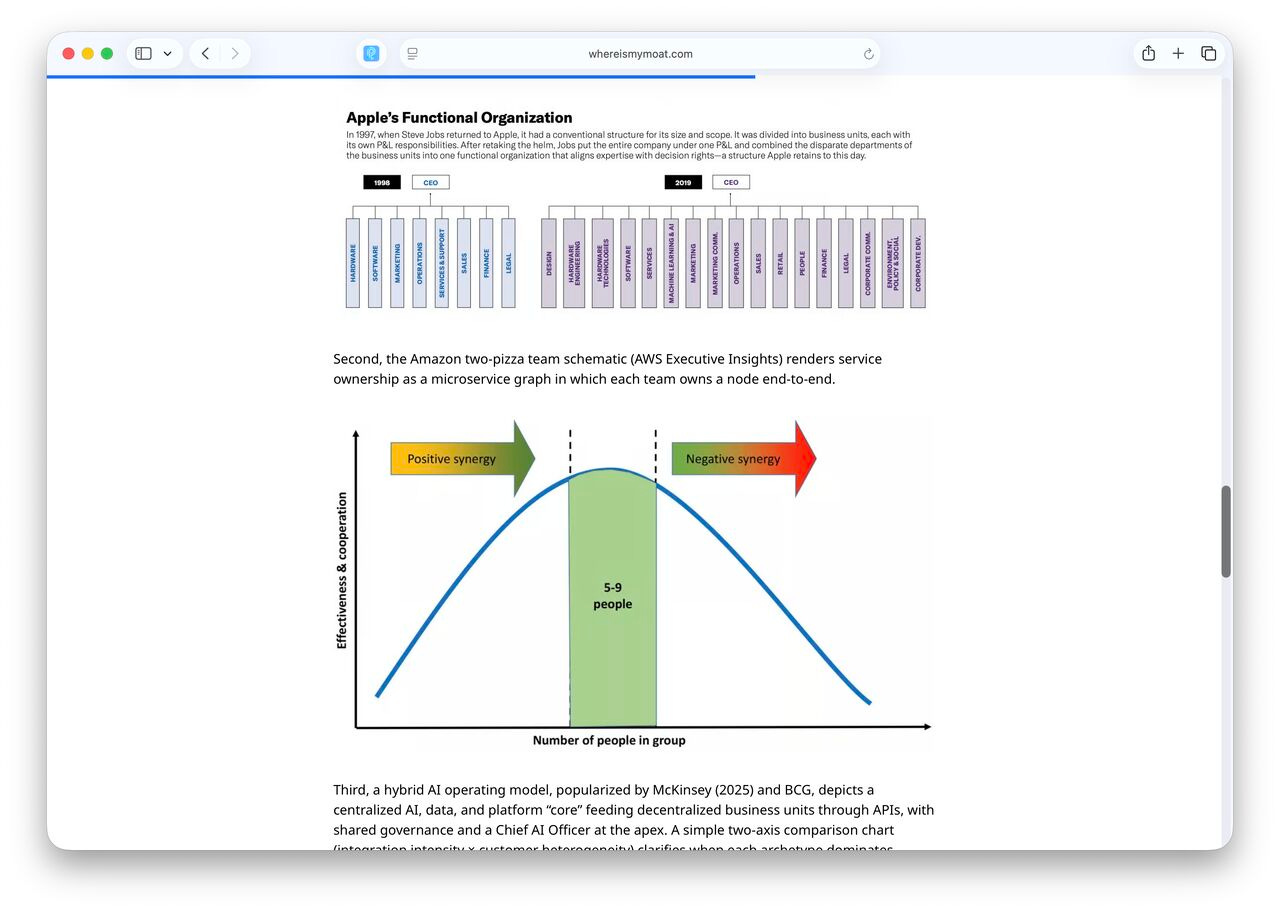
In my latest Where is my MOAT? essay, I argue that AI sharpens the old organization-design debate.
Functional structures still win where integration and technical excellence matter most; business units still win where customer heterogeneity and speed matter most, but AI changes the economics of both by making centralized data/model/platform capabilities more valuable while simultaneously making smaller autonomous teams easier to coordinate. (continue reading HERE)
This week on “Where is my MOAT?”
30 April: [Essay] Organized by Business Unit or Function?
2 May: [Analysis] What Tim Cook meant for Apple
3 May: [Deep dive] Samsung
Consider subscribing to get that👇🏻 (one month free)

Thank you for being an onStrategy reader!
Interesting newsletters 💡
Endi Ungureanu - Tura de duminica