


Dear OnStrategy Reader,
Here is what you will find in this issue:
Has Apple missed “the band” form?
Anyone serious about hardware should make its software
on Google‘s search agents will increase its TAM
Onto the update:
Has Apple missed “the band” form?
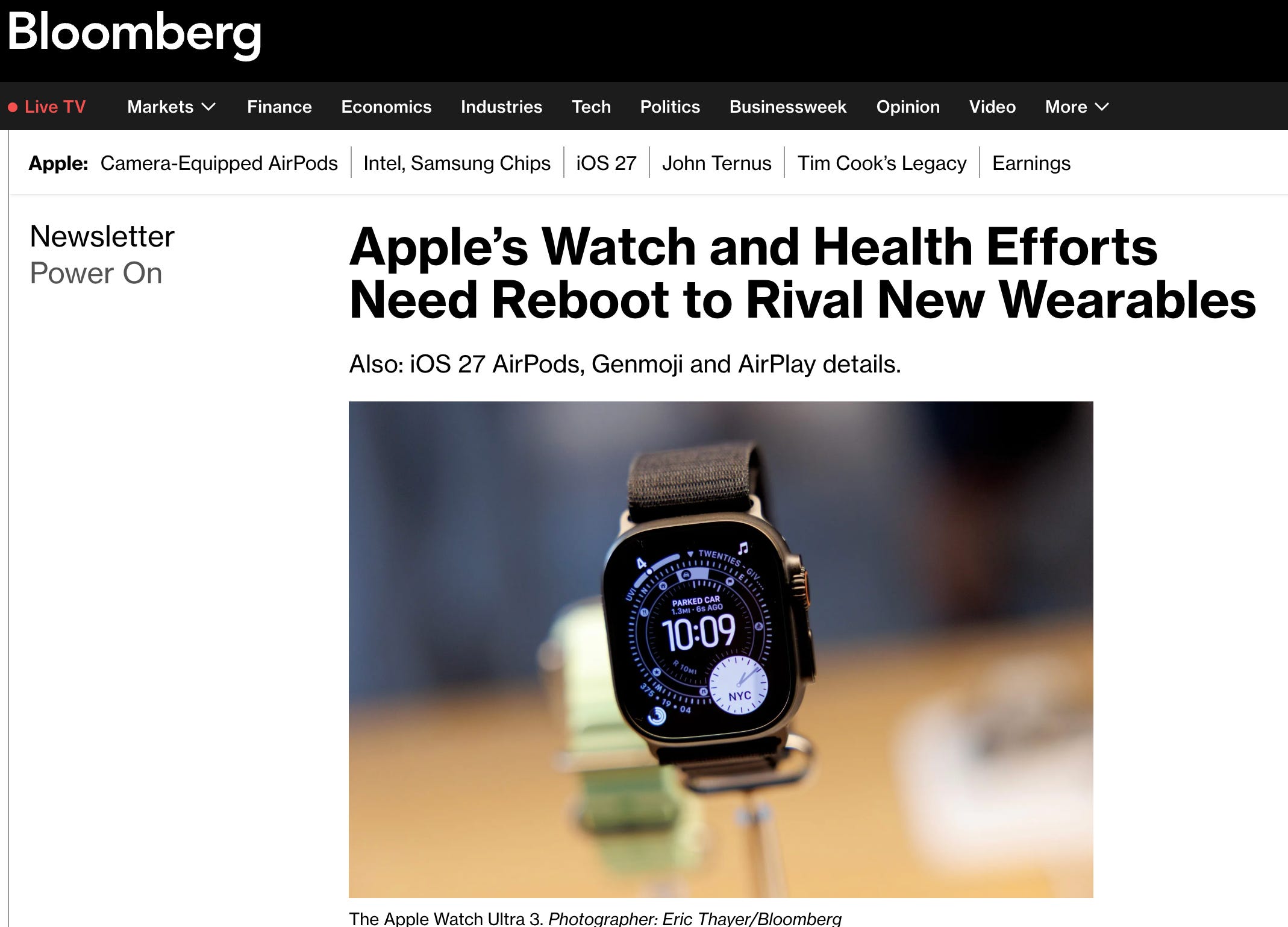
Apple did not miss health wearables in the obvious way. The Apple Watch is still the category-defining device, that is, a computer on the wrist, a notifications terminal, a fitness tracker, an emergency device, a payments device, and increasingly a medical-adjacent platform. That is exactly the problem. Mark Gurman, in a Bloomberg piece, frames the Apple Watch as “over a decade old” and in need of a shake-up because the market has pivoted toward more focused health and fitness wearables like Whoop, Oura, Fitbit-style bands, and screenless devices. Apple built the best wearable computer. Oura and Whoop built health instruments. Those are not the same product.
The strategic miss is not in hardware but in use-case purity. Whoop says: “I am for recovery, strain, sleep, and performance”. Oura says “I am for sleep, readiness, temperature, and long-term body signals”. Apple Watch says “I can do everything, including telling you that your Uber is arriving while you are trying to sleep”. In classic Apple fashion, integration made the device powerful. In this case, integration also made it noisy. Health is not just another app category. Health is intimate, passive, longitudinal, and trust-based. A ring or band can disappear into the background. A watch keeps asking to be looked at.
This matters because the next phase of wearables is less about “tracking workouts” and more about owning the personal health graph. Apple has the installed base, the chips, the sensors, the Health app, the privacy brand, the iPhone distribution, and the medical partnerships. But Oura and Whoop have something Apple increasingly struggles to create inside mature product lines, which is, a sharper job to be done. They sell interpretation, not just measurement. They sell a daily answer like “should I push, rest, sleep, recover, change behavior?”. Apple often gives you data to share it with your doctor or just to sit idle. The challengers give you a narrative, and in consumer health, the narrative is the product.
Yes, Apple has partially missed the band/ring moment, not because it cannot build one, but because the Watch’s success made the obvious next product politically and strategically awkward. A screenless Apple health band would implicitly admit that the best health wearable is not always a tiny iPhone on your wrist. An Apple Ring would compete with the Watch at night, in workouts, and for passive monitoring. But that is exactly why Apple should do it. The danger is not that Whoop or Oura become bigger than Apple Watch. The danger is that they define the health-native interface while Apple remains trapped defending the smartwatch. The iPhone taught Apple to aggregate attention. Health wearables require the opposite, ie. earning the right to disappear. Bloomberg
Anyone serious about hardware should make its software
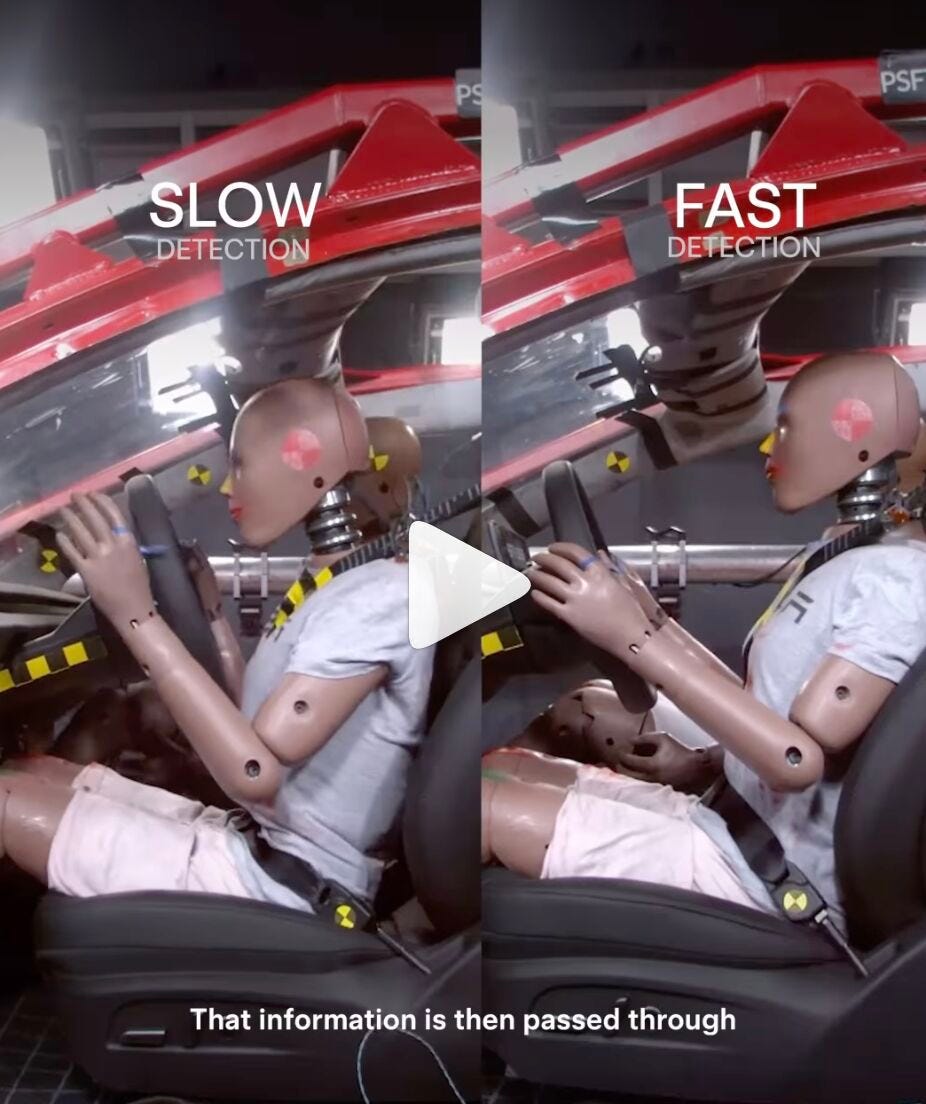
Tesla’s Vision-based airbag feature is the kind of thing that looks small until you remember the entire Tesla thesis: the car is not a product; it is an endpoint. Legacy automakers sell you a machine that gets old. Tesla sells you a machine that can, in theory, gets better. Deploying airbags 70 milliseconds earlier is a reminder that Tesla’s real advantage is not batteries or factories, but the ability to turn fleet data into software updates and software updates into product differentiation.
The implication is uncomfortable for everyone else. Safety used to be hardware, regulation, and model-year engineering. Now it is becoming data, inference, and over-the-air distribution. That gives Tesla a path to compound advantages across the installed base, but also raises the stakes.
When software touches safety-critical systems, execution errors are liabilities. This is why Tesla is still so hard to value. It is either an automaker with a dangerous multiple, or a real-world AI platform hiding inside a car company. The market keeps paying for the second story, but the risks keep reminding you that the first one has not disappeared. LINK
on Google's search agents will increase its TAM
Google’s old business was, roughly, that you typed a thing you wanted into a box, Google showed you ten blue links and three ads, and everyone involved pretended this was about "organizing the world’s information" rather than "auctioning your intent to the highest bidder". It was a very good business.
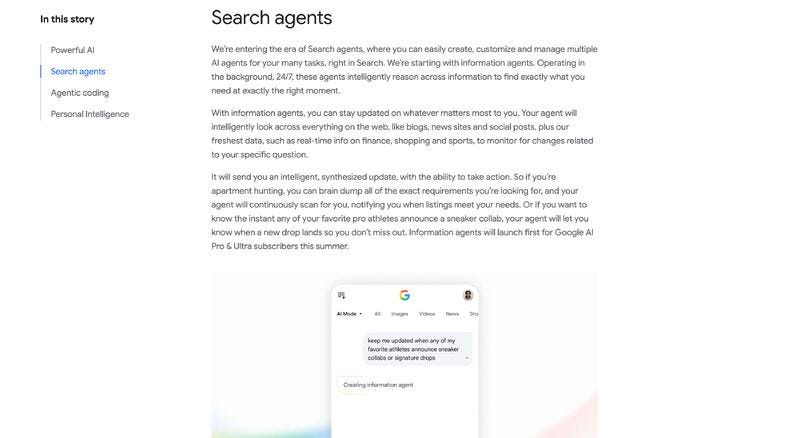
Now Google is trying to make that business slightly weirder and potentially much better. At I/O, it announced search agents. These agents are basically Google Alerts, but smarter, more contextual, and living inside the search experience itself. Instead of you searching once for "best family hotel in Lisbon in October", the agent can keep looking, keep comparing, keep waiting, and eventually say: "Good news, the thing you wanted now exists, is cheaper, or is being aggressively marketed to you by someone with a conversion budget".
This is useful for users, probably. But it is also extremely useful for Google, definitely. Search used to monetize intent at the moment of expression. You searched, Google inferred what you wanted, advertisers paid. AI search agents let Google monetize intent over time. Your desire is no longer a query, but more likean annuity.
And the really interesting part is not just advertising. It is demand discovery. If enough people ask Google for something that does not quite exist yet (examples: a cheaper EV, a better CRM for dentists, a hotel with childcare and no children somehow), Google learns that before the market does. Eventually, it can tell companies, explicitly or implicitly: "People want this. You should make it. Also, here is where to advertise it when you do".
The future of search extends now beyond finding what exists. It is building a futures market for unmet demand. Google used to sell access to information. Now it may sell access to desire before the product exists. Which, as businesses go, is pretty good. LINK
This week on “Where is my MOAT?”
21 May: [IPOs] Cerebras, Anthropic, and the inference bottleneck
22 May: 🚀 SpaceX (SPCX): A strategic analysis of the S-1
23 May: [Analysis] on the 🇷🇴 Romanian economy
24 May: [Deep Dive] LVMH sells patience
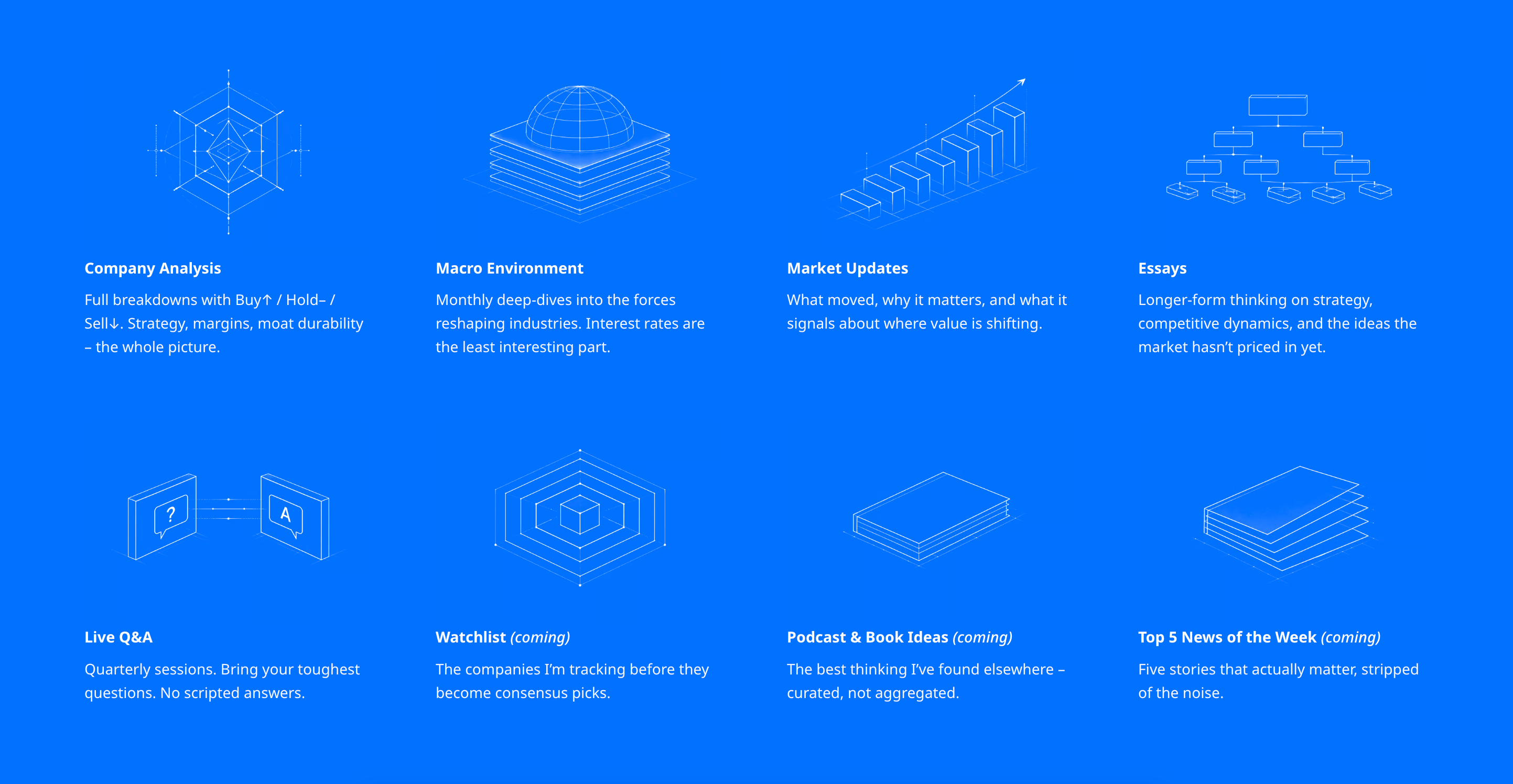
Consider subscribing to get that👇🏻 (one month free)
Thank you for being an onStrategy reader!
Interesting newsletters 💡
Endi Ungureanu - Tura de duminica